How did the electrification of the Czech countryside unfold a century ago? You’d never guess that it all began thanks to a local priest—who was also a member of the Provincial Assembly—who initiated the founding of the Agricultural Cooperative and its surrounding areas.
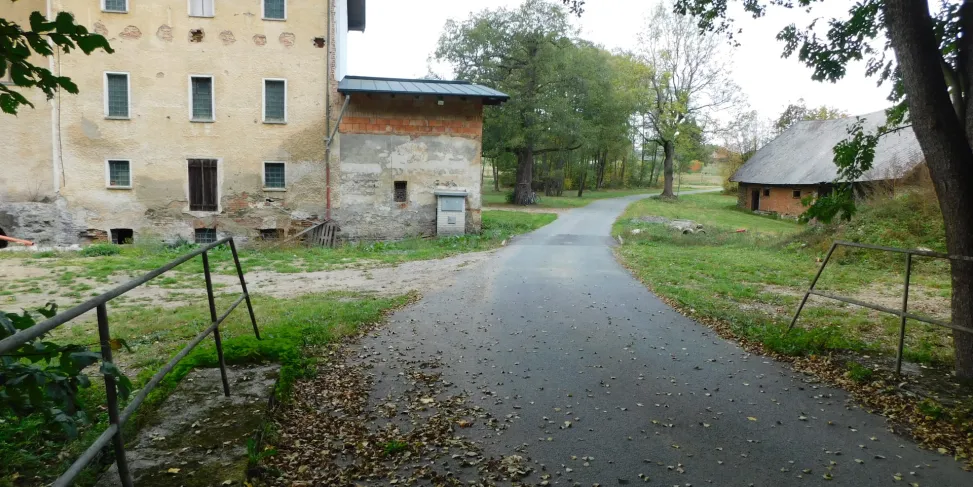
In Čachrov, at the turn of the 19th and 20th centuries, it was necessary to address the difficult situation facing local farmers as well as the water shortage in the village. On the advice of the Křižík company, an old, dilapidated mill in the valley below the village was purchased. Later, however, the mill burned down. During the subsequent reconstruction, the cooperative built a new mill, which was also equipped with a hydroelectric power plant. It was the year 1902, and the first local hydroelectric power plant began operating in the Šumava Mountains. And that’s not all. It was not only one of the first cooperative power plants in Bohemia but also in the entire Austro-Hungarian Empire.
The mill received a dynamo for generating electricity from the aforementioned Karlín-based electrical engineering firm František Křižík, which viewed this contract primarily as a means of promoting electrification. This allowed the full power of the local Francis turbine to be utilized; with its high head, it was more than sufficient to power not only the local milling machinery. During the day, the electricity powered the motors of agricultural machinery and the municipal water pump, and in the evening, it illuminated the entire village. This is how the electrification of rural areas began in Bohemia a hundred years ago.