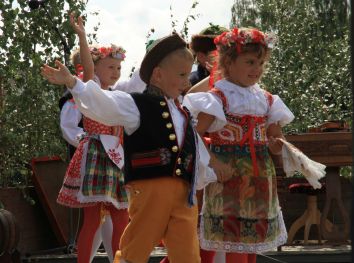
Chodsko Folk Costume

What kind of traditional costumes did girls from the Chodsko region wear when they got married, and what was worn on weekdays versus holidays? If you want to learn more about traditional clothing, the Museum of Traditional Costumes in Postřekov will answer these questions and more.
The history of traditional costumes in the Chodsko region dates back to the early 19th century. Each village was characterized by a different, distinctive costume—depending on the village’s wealth, the fertility of the land, and the occasion for which the costume was worn. Festive folk costumes are vibrant and richly colored. In contrast, during the periods leading up to Easter or Christmas, women in the Chodsko region wore black folk costumes. The most characteristic element of the women’s Chod folk costume is a black scarf, richly embroidered with colorful patterns, which women wear primarily on their heads and which falls across their chests down to their waists.
Postřekov – Folk Costume Museum
At the Folk Costume Museum in Postřekov, you can see over 40 mannequins displaying a wide variety of styles, color combinations, and variations of the Chod folk costume. There are also period photographs, postcards by regional artists, sewing supplies, an exhibition on feather plucking, period advertising posters from local fabric and sewing supply stores, and more. Everyday items are also on display—such as a butter churn, butter dishes, cradles, and baby carriages.
The museum in Postřekov opened in 2011 thanks to two seamstresses—Marie Langová and Anna Burešová—who have been collecting traditional costumes from the villages of the Chodsko region. You can also see rare items, such as a 200-year-old white bonnet embroidered in black, known as a “koláč,” and a 150-year-old blue German dress. You’ll learn what traditional costumes were worn for which occasions, as well as when and by whom they were worn. If you’re also interested in Czech cinema, this museum will show you what the Pansanitor therapeutic device looks like—the same one used by the doctor in the film *Postřižiny*.